
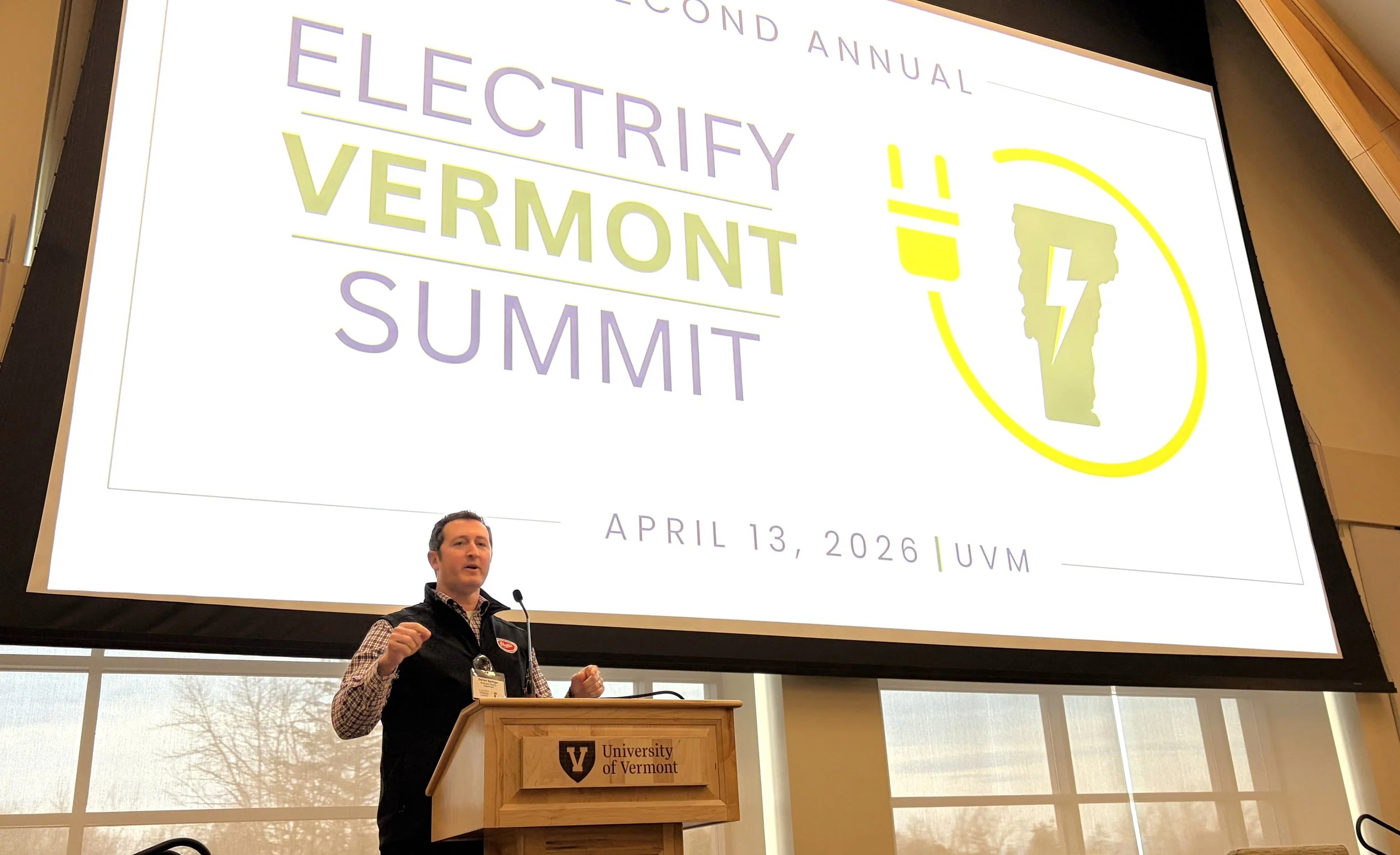
Darren Springer (GM, Burlington Electric Department) welcomes attendees to the Electrify Vermont Summit at UVM.
The Second Annual Electrify Vermont Summit was sold out before the doors opened yesterday morning. This gathering of researchers, utilities, policymakers, and practitioners filled the conference hall at UVM's Dudley Davis Center in Burlington. The conversations kicked off by Darren Springer, General Manager of the Burlington Electric Department, were as energized as the grid they were discussing.
I attended as a clean energy consultant who has spent more than a decade often working on the early development and permitting side of the energy transition, engaged in the complex and sometimes perilous steps that come before ground is broken or electrons flow. What I heard Monday reinforced something I've observed from project sites and regulatory proceedings across the country: the solutions exist, the urgency is growing, and the gap between what we know works and what we're successfully deploying at scale is not easy to bridge.
Vermont as a Laboratory
Vermont is not the largest energy market. But it punches well above its weight as a place where ideas get tested on a real grid with real consequences. Burlington Electric became the first 100% renewable municipal utility in the United States in 2014. The Vermont Electric Cooperative manages more than 200 MW of distributed generation against just 50 MW of load. The Vermont Public Power Supply Authority supports thirteen municipal utilities serving 50 communities, one with as few as 600 customers. And UVM's CREATE lab led by Professor Mads Almassalkhi is testing the control systems, inverters, and other hardware that the grid of the future depends on, right here on campus.
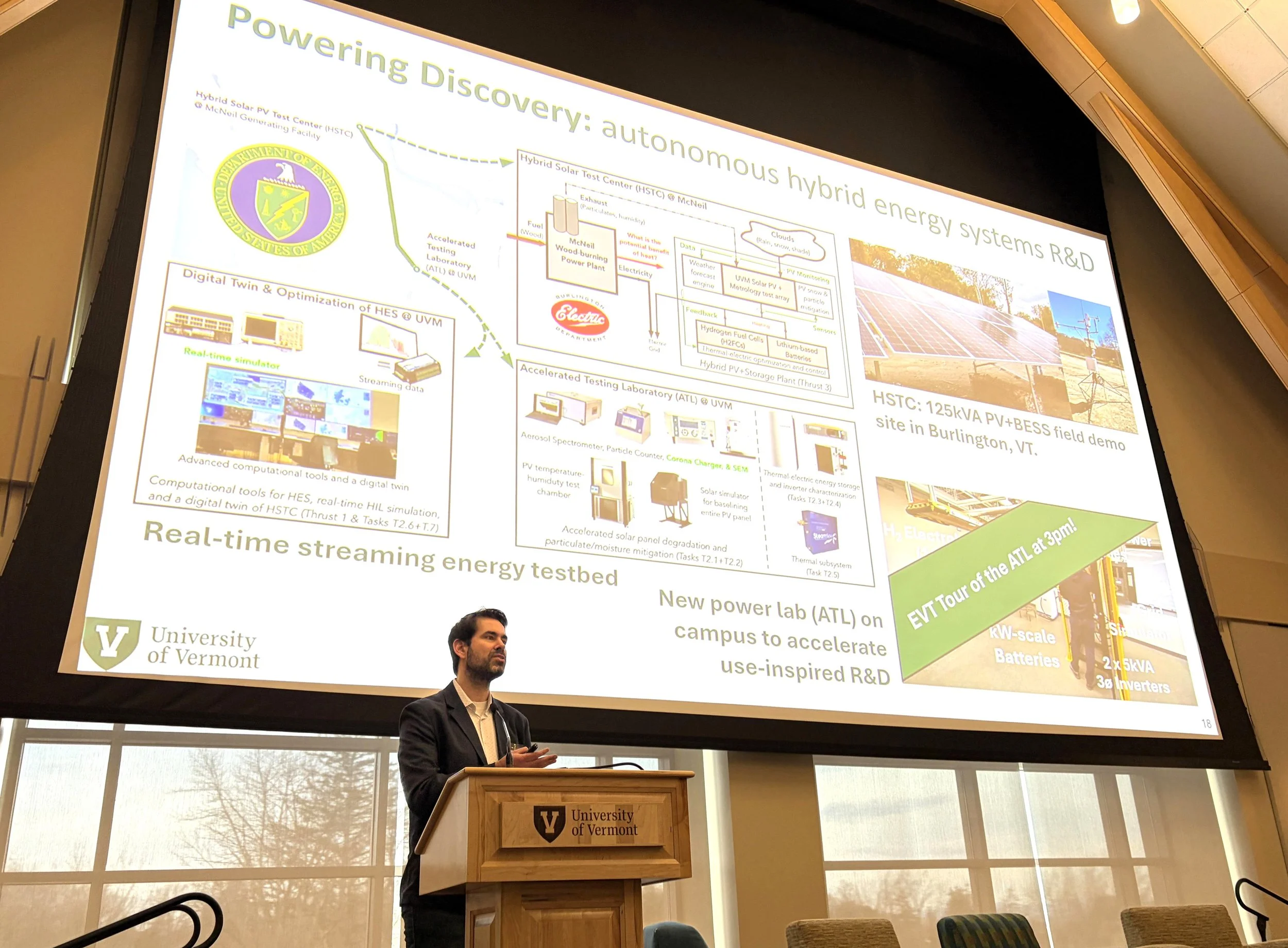
UVM Professor Mads Almassalkhi sharing some of the innovative work of the Center for Resilient Energy & Autonomous Technologies in Engineering (CREATE)
The Affordability Crisis Is Not Abstract
The most urgent theme I heard throughout many of Monday's panels was affordability. And it was treated with a seriousness that reflected the urgency of the moment. Electricity rates are rising. Household budgets are stretched. Energy burdens fall the hardest on those least able to afford it.
One observation landed especially hard: the wealthy can invest in backup power, EVs, and heat pumps, and capture real savings. The lowest-income households can access meaningful subsidies. It is the middle class, as one panelist put it, that is left holding a bill it cannot afford and was never asked about. That is not a sustainable position for electrification advocates, or for elected officials who will hear from voters in November.
The economic case for electrification is clear, and it was made forcefully. According to the Energy Action Network, 75 cents of every dollar spent on fossil fuels leaves the Vermont economy. That ratio essentially reverses with electricity — roughly 75% of electricity spending stays local, recirculating through the wages of line workers, installers, and local power producers. When Darren Springer of Burlington Electric noted that 60% of EV charging revenue stays in Vermont compared to the vast majority of gasoline spending leaving the state (and country), he was making an economic development argument as much as a climate one. These are the facts that can broaden the clean energy coalition.
The Deployment Gap
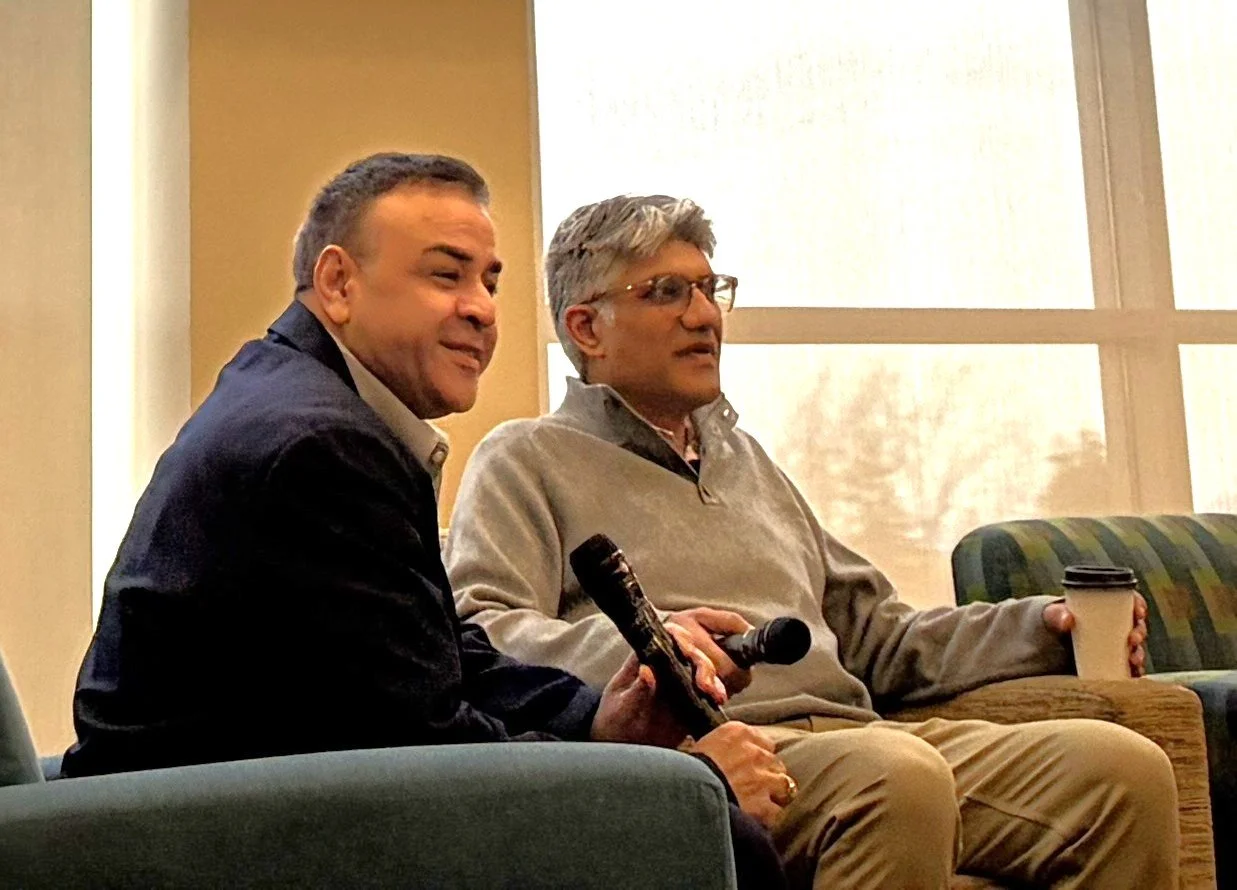
Navneet Trivedi (left) moderates a provocative keynote by Jigar Shah (right).
Here is the tension the day's discussions kept returning to: the technologies exist, the economics work, and yet deployment at scale lags behind what is needed. Battery storage, virtual power plants, demand flexibility, and behind-the-meter resources are no longer experimental. They have been demonstrated repeatedly, including in Vermont. What they lack is not proof. What they lack is market access.
Jigar Shah made the point in his characteristically direct but compelling style: presenting data to utilities is not the path to change. The path is passing legislation. Virginia showed it earlier this month, passing a bill voted into law by its new Governor Abigail Spanberger requiring its major utilities to file demand flexibility programs with the state commission, programs that must consider storage, VPPs, heat pumps, and demand response on equal footing with conventional generation. That is how change occurs rapidly in regulated markets.
The question for Vermont, Massachusetts, and other states is whether their legislatures are ready to do the same, and whether the practitioners, advocates, and policymakers in rooms like Monday's are prepared to make that case.
Personal Note
Between sessions, I met up with my son Mark, a senior in mechanical engineering at the UVM College of Engineering and Mathematical Sciences. The summit was unfolding a few buildings away from where he is finishing his capstone project. The engineers his generation sends into this field will inherit both the urgency and the opportunity that filled that room on Monday. That felt like exactly the right place for both of us to be.
Chris Rodstrom is the Founder and Principal Consultant of CBR Energy Solutions, a clean energy development, siting, and permitting consultancy based in Stow, MA. Chris works with developers and regulators navigating complex energy projects across New England and New York — from early-stage site and regulatory screening to interconnection strategy and permitting. If the deployment challenges discussed here are affecting your pipeline, I'd welcome the conversation.